Mobilfunkstrahlung, ein unterschätzter Krankheitsfaktor

http://www.buergerwelle.de
18. Januar 2017

Vortrag gehalten von Peter Schlegel dipl. Ing. ETH an der Sonderveranstaltung “Elektrosmog und seine Auswirkungen auf den Körper” der Ärztevereinigung SSAAMP am 13. Oktober 2016 in Zürich. Teilnehmer waren rund 100 medizinische Fachpersonen.

Es handelt sich um eine mit zusätzlichen (an der Veranstaltung aus Zeitgründen nicht präsentierten) Darstellungen ergänzte Version von 62 Vortragsfolien. Zum besseren Verständnis wurden einige Folien mit am Vortrag mündlich gegebenen Erklärungen und Kommentaren ergänzt. Die Vortragsfolien sind auf Schweizer Verhältnisse ausgerichtet.


Die Vortragsfolien werden vom Autor hiermit als PDF-Datei zur weiteren Verwendung freigegeben. Der Autor bittet um Benachrichtigung, wenn Elemente dieses Vortrags zur eigenen öffentlichen Verwendung übernommen werden. Verwendung bitte mit Quellenangabe.
Mitreferenten waren (Veranstaltungsflyer SSAAMP):

  • a.o. Univ. Prof. Dr. Wilhelm Mosgöller: “Gentoxische Wirkungen hochfrequenter elektromagnetischer Mobilfunk-Felder – ein Projektbericht”
  • Prof. Dr. Dr. habil. Klaus Buchner MdEP: “Wirkung hochfrequenter elektromagnetischer Strahlung auf Hormone, Neurotransmitter und oxidativer Stress”

Die Vorträge fanden vor einem überdurchschnittlich interessierten medizinischen Fachpublikum statt. Dieses Interesse stand im erfreulichen Gegensatz zu der sattsam bekannten Abwehrhaltung vieler Schulmediziner gegenüber dem Thema – eine Abwehrhaltung, wie sie die Referenten in der Praxis leider häufig beobachten. Noch immer beschweren sich zahllose elektrosensible Menschen, dass sie von ihrem Arzt nicht ernst genommen werden. Wo medizinische Fakultäten zur Behandlung dieses Themas einen Dozenten mit Nähe zur Mobilfunk- und Elektrizitätsbranche einsetzen, wird die unheilvolle Verkennung der Realität nun auch der jungen Ärztegeneration eingeimpft.
In der Schlussfolie seines Vortrags hat Peter Schlegel die aus seiner Sicht nötigen Massnahmen im öffentlichen Gesundheitswesen und in der medizinischen Praxis aufgelistet:

  • Die Einrichtung „weisser“ (= funkfreier) Zonen für stark Betroffene ist als Überlebensmassnahme dringend notwendig, obwohl in sozialer Hinsicht („Ghettoeffekt“) nicht ideal. Mittel- bis langfristig muss der Funkstrahlungspegel im ganzen Land massiv gesenkt werden.
  • Die Universitätsausbildung der Ärzte ist umgehend anzupassen. In der Alternativmedizin ist Elektrosensibilität – erfahrungsbedingt – längst anerkannt und therapeutisch relevant.
  • Die Zusammenarbeit der Ärzte mit unabhängigen Mess- und Beratungsfachleuten (Beispiel: Baubiologen mit professioneller Messausbildung) sollte intensiviert werden. Für solche Fachleute ist ein anerkanntes Berufsbild zu schaffen, damit die Fachkompetenz angehoben wird und die Angebotskapazität steigt.
  • Arzt- und Zahnarztpraxen, Spitäler, Altersheime, Reha-Kliniken usw. sind von Funkstrahlung, vor allem auch von WLAN-, Bluetooth- und DECT-Strahlung, frei zu halten, als Sofortmassnahme zumindest in einem Teil der Zimmer.
  • Die Ärzte werden angehalten, in ihrer Praxis die EUROPAEM-Leitlinie zu konsultieren. Die Patientenschaft sollte sachgerecht zum Thema Auswirkungen elektromagnetischer Felder (EMF) und Elektrosensibilität (EHS) informiert werden (Flyer der Ärztinnen für Umweltschutz AefU und von Betroffenenorganisationen im Wartezimmer auflegen).


Posted in Uncategorized | Tagged , , , , , , , | Comments Off on Mobilfunkstrahlung, ein unterschätzter Krankheitsfaktor

Ohio: “Brace yourself”; high bills for many Duke Energy customers despite warm winter

The news channel did not investigate this, and instead allowed Duke Energy airtime for public relations.

From WCPO

Why your Duke bill’s so high, despite warm month
Don’t Waste Your Money
John Matarese
January 24, 2017

Video at http://www.wcpo.com/48201a4a-7fb6-40c0-a1be-05624825ad39

Segment starts about 1:10
Chart at 2:47 shows dramatic difference in bill.
Excerpt:
If you have not yet received your January Duke Energy bill yet, brace yourself.

At least a dozen Cincinnati area Duke customers have complained to 9 On Your Side about a big jump in their heating bill this new year, despite recent near-record 60 degree weather.

So we wanted to know what’s going on and what you can do.

January Bill Five Times Higher

Victoria Brown and her husband own a small T-shirt and sign shop in Florence,KY called Abrupt Design.

But this Northern Kentucky woman got an abrupt shock, when her January Duke bill just turned out to be five times the size of her last one.

It was over $700 and it normally runs about $120,” the stunned shop owner said. The total, with taxes, came to almost $800 for this small, 700 square foot shop in a strip mall.

She says there’s no reason for such a surge, even with some colder days. “Nothing has changed.  Absolutely nothing has changed,” in her shop, she said.

Other customers tell us of more modest, but still significant increases in their latest January heating bill.

http://www.wcpo.com/money/consumer/dont-waste-your-money/why-your-duke-bills-so-high-despite-warm-month

Posted under Fair Use Rules


Posted in Uncategorized | Tagged , | Comments Off on Ohio: “Brace yourself”; high bills for many Duke Energy customers despite warm winter

2 minutes’ exposure to 900 MHz causes blood-brain barrier breaches

From Cell Phone Task Force
THE WORK OF LEIF SALFORD

Dr. Leif SalfordSince Allan Frey, whose work is also highlighted here, discovered in 1975 that microwave radiation causes the blood-brain barrier to leak, at least a dozen laboratories throughout the world have corroborated this effect. Currently the most active research of this kind is being done at Lund University in Sweden.

Dr. Leif Salford is a neurosurgeon at Lund University Hospital, and Chairman of the Department of Neurosurgery. Since 1988 he has led a team of researchers that have exposed thousands of laboratory rats to microwave radiation from various sources. Since the late 1990s they have used mobile telephones as the source of this radiation.

Their results have been consistent and alarming: not only does radiation from a cell phone damage the blood-brain barrier, but it does so at even when the exposure level is reduced a thousandfold. Even more disturbingly, and contrary to what was expected, the damage to the blood-brain barrier worsened when the experimenters reduced the exposure level. The implies that SAR ratings for cell phones may be worthless and that it may not be possible to make cell phones safer by reducing their power.

In laboratory rats, Salford’s team has demonstrated that blood-brain barrier leakage occurs after only two minutes of exposure. Further, a single two-hour exposure to a cell phone, even at reduced power, was shown to damage or destroy up to two percent of an animal’s brain cells.

Dr. Leif SalfordIn other experiments in Salford’s laboratory, long term exposure of rats to a cell phone caused memory impairment, and a single six-hour exposure at extremely low power levels caused genetic damage. Exposure to a low-frequency magnetic field (low frequencies are also emitted by cell phones) caused disturbances of calcium transport in cells.

Salford has called the use of cell phones by human beings “the largest biological experiment ever,” and he calls the potential implications of his laboratory results “terrifying.” “Those who might normally have got Alzheimer’s dementia in old age could get it much earlier,” he said. “Perhaps putting a mobile phone repeatedly to your head is something that might not be good in the long term.”

ARTICLES BY LEIF SALFORD [links current as of 1-23-17]

BLOOD-BRAIN BARRIER PERMEABILITY IN RATS EXPOSED TO ELECTROMAGNETIC FIELDS USED IN WIRELESS COMMUNICATION, 1997
http://portal.research.lu.se/portal/files/5795616/3634019.pdf

NERVE CELL DAMAGE IN MAMMALIAN BRAIN AFTER EXPOSURE TO MICROWAVES FROM GSM MOBILE PHONES
Leif G. Salford, Arne E. Brun, Jacob L. Eberhardt, Lars Malmgren, and Bertil R. R. Persson, 2003
http://www.ncbi.nlm.nih.gov/pmc/articles/PMC1241519/pdf/ehp0111-000881.pdf

NON-THERMAL EFFECTS OF EMF UPON THE MAMMALIAN BRAIN: THE LUND EXPERIENCE
Leif G. Salford, Henrietta Nittby, Arne Brun, Gustav Grafström, Lars Malmgren, Jacob Eberhardt, and Bertil R. R. Persson, 2007
www.icems.eu/docs/Salford.pdf

THE MAMMALIAN BRAIN IN THE ELECTROMAGNETIC FIELDS DESIGNED BY MAN—With special reference to blood-brain barrier function, neuronal damage and possible physical mechanisms, 2008
http://web.archive.org/web/20160304044046/http://www.hese-project.org/hese-uk/en/papers/salford_mammalian_brain_2008.pdf
https://academic.oup.com/ptps/article/doi/10.1143/PTPS.173.283/1926472/The-Mammalian-Brain-in-the-Electromagnetic-Fields abstract with link to paper

COGNITIVE IMPAIRMENT IN RATS AFTER LONG-TERM EXPOSURE TO GSM‐900 MOBILE PHONE RADIATION, 2008
https://www.ncbi.nlm.nih.gov/pubmed/18044737 Abstract
http://web.archive.org/web/20100928192425/http://www.dontcellout.com/uploads/4/0/1/1/4011544/cognitive_impairments_in_rats.pdf

RADIOFREQUENCY AND EXTREMELY LOW-FREQUENCY ELECTROMAGNETIC FIELD EFFECTS ON THE BLOOD-BRAIN BARRIER, 2008
http://weepinitiative.org/LINKEDDOCS/health/nittby.PDF

INCREASED BLOOD-BRAIN BARRIER PERMEABILITY IN MAMMALIAN BRAIN 7 DAYS AFTER EXPOSURE TO THE RADIATION FROM A GSM-900 MOBILE PHONE, 2009
http://ccst.us/projects/smart/documents/082009_Nittby_Increased_Permeability.pdf

COMPARISON BETWEEN TWO MODELS FOR INTERACTIONS BETWEEN ELECTRIC AND MAGNETIC FIELDS AND PROTEINS IN CELL MEMBRANES, 2009
http://people.eng.unimelb.edu.au/malkah/Publications/2009_Bio_Sweden_Work.pdf

Health Department report on Smart Meter health risks

Posted in Uncategorized | Tagged , , , , , , , | Comments Off on 2 minutes’ exposure to 900 MHz causes blood-brain barrier breaches

More on the blood-brain barrier: lower power exposures have wider impact

A weaker pulse mimics the signals of the body and [is] therefore recognised.

…It doesn’t seem to matter how long you talk on a cellular phone; the blood-brain-barrier is opened at once. 

The worst damage in these experiments was from 900 MHz, similar to wireless Smart Meters. 

If our communities are filled with Smart Meters and their radiation (in addition to other wireless emissions), our blood-brain barriers are constantly being compromised, and the neurological systems and brains of humans and other creatures are being damaged. 

This is another reason why a repeal, not an opt-out, is the only answer.

Translation of article in Swedish conservative newspaper Svenska Dagbladet
September 9, 1999
Ulrika Bj_rkst+n / translation by Adam Huuva

Protecting the brain…….

The blood-brain barrier is a cell layer between the blood that circulates in the blood vessels of the brain and the actual brain tissue. Oxygen and nutrition is let inside by the barrier while carbon dioxide and waste products are transported out through it. The barrier hinders some medicins and several poisonous substances to invade and injure the brain.

Phones make brain receptive to poison

New Swedish research shows that the radiation from mobile phones might make it easier for poison to penetrate into the brain. The findings could explain the diseases that american soldiers who have participated in high-tech warfare are suffering from.

This rat brain has been exposed to microwave fields similar to those from a mobile phone handset. The dark spots are albumen that has come into the brain through the blood-brain-barrier opened by the radiation.

Pictures of rat brains at http://bioenergy.timleitch.net.nz/cellphone_risks/blood_brain_barrier.htm

The microwave radiation from cell phones can open the safety barrier that is supposed to protect the brain from being invaded by poisonous substances contained in blood. A research team at Lund university has found that the protein albumen leaks through the so called blood-brain-barrier into the brain of rats that have been exposed to microwaves similar to those irradiated by a mobile phone. Albumen is naturally contained in blood but it can harm the brain.

“We’re seeing extremely small amounts of protein and we don’t know how dangerous it is,” says Leif Salford, a neurosurgeon Lund hospital.

“But other experiments, where albumen has deliberately been injected into rat brains, have shown that very small amounts can harm the brain cells. Amounts not much greater than the ones we have found can kill nerve cells.”

It is still impossible to tell whether the leakage that the Lund research team has found in rats actually means that mobile telephony damages the human brain.

Leif Salford, the neuropathologist Arne Brun and the radiation physicist Bertil Perssion still want the results to be taken seriously. The blood-brain-barriers of humans and rats are similar in function.

Furthermore, since albumen can get into the brain there is reason to believe that other smaller or equal sized molecules can too.

  • Proteins found in the blood can, if they get to the brain, cause auto immune diseases such as MS, multiple sclerosis.
  • Damaged nerve cells could also lead to dementia, prematured aging, and Parkinson’s disease.
  • Inflamed brain cells can indirectly be linked to Alzheimer’s disease.Medication that under normal circumstances wouldn’t be able to penetrate the blood-brain-barrier could do so and cause damage.

The unexplained symptoms of American soldiers of the Kuwait war are suspected to link to the medication they took against nerve gas.  The microwaves surrounding soldiers in high-tech warfare could have opened the blood-brain-barrier, and the medication penetrated into the brain.  The possibility is now investigated by the US Air Force in co-operation with the Lund [University, Sweden] scientists.

Especially worrying is the fact that even very low microwave effects seem to affect the brain.  WHO’s threshold value for mobile phones is two watts absorbed effect per kilogram of body tissue.

According to [Leif] Salford and his [colleagues], even at 0.0001 – 0.001 of a Watt there is a notable amount of albumen in the brains of 50 % of the rats examined.  The radiation from the cell phone towers would therefore be enough to affect the brain.  A person in the vicinity of someone using a cell phone can be affected by the radiation from the phone.  The very low effects are also the ones that affect the brain the most.

At a few tenths of a watt only a third of the rats are affected, and at a few Watts even less than that.  This means that the problem can’t be easily solved, for instance, by shielding or by using earphones.

 In biological systems, there are often “windows” where the organism is more sensitive.  A weaker pulse mimics the signals of the body and are therefore recognised.

The WHO threshold values only consider tissue heating.  The electrical signaling of the body is affected in a completely different way, says Leif Salford.  The Lund research team has investigated microwave radiation at both 900 MHz [similar to many Smart Meters] and 1800 MHz, as used by different cell phone systems.  Both frequencies show the same results, but lower frequencies penetrate deeper into the brain.[The new nationwide FirstNet emergency/broadband system will be even lower, in the 700 MHz range, with greater penetration ability]

It doesn’t seem to matter how long you talk on a cellular phone; the blood-brain-barrier is opened at once. 

http://www.oocities.org/uk_nirvana/brainblood.htm
http://bioenergy.timleitch.net.nz/cellphone_risks/blood_brain_barrier.htm

Posted in Uncategorized | Tagged , , , , , , , , , , | Comments Off on More on the blood-brain barrier: lower power exposures have wider impact

The Blood-Brain Barrier – “Keep Out”

Microwaves open the blood-brain barrier…

From Neuroscience for Kids
Dr. Eric H. Chudler, University of Washington

More than 100 years ago it was discovered that if blue dye was injected into the bloodstream of an animal, that tissues of the whole body EXCEPT the brain and spinal cord would turn blue. To explain this, scientists thought that a “Blood-Brain-Barrier” (BBB) which prevents materials from the blood from entering the brain existed. More recently, scientists have discovered much more about the structure and function of the BBB.

Anatomy of the BBB

The BBB is semi-permeable; that is, it allows some materials to cross, but prevents others from crossing. In most parts of the body, the smallest blood vessels, called capillaries, are lined with endothelial cells. Endothelial tissue has small spaces between each individual cell so substances can move readily between the inside and the outside of the vessel. However, in the brain, the endothelial cells fit tightly together and substances cannot pass out of the bloodstream. (Some molecules, such as glucose, are transported out of the blood by special methods.)

Glial cells (astrocytes) form a layer around brain blood vessels and may be important in the development of the BBB. Astrocytes may be also be responsible for transporting ions from the brain to the blood.

Functions of the BBB

The BBB has several important functions:

  1. Protects the brain from “foreign substances” in the blood that may injure the brain.
  2. Protects the brain from hormones and neurotransmitters in the rest of the body.
  3. Maintains a constant environment for the brain.

General Properties of the BBB

  1. Large molecules do not pass through the BBB easily.
  2. Low lipid (fat) soluble molecules do not penetrate into the brain. However, lipid soluble molecules, such as barbituate drugs, rapidly cross through into the brain.
  3. Molecules that have a high electrical charge are slowed.

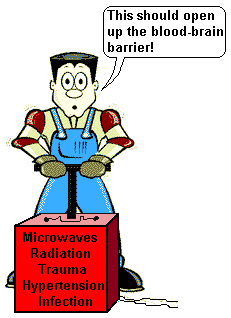
The BBB can be broken down by:

  1. Hypertension (high blood pressure): high blood pressure opens the BBB.
  2. Development: the BBB is present, but may be not fully formed at birth.
  3. Hyperosmolitity: a high concentration of a substance in the blood can open the BBB.
  4. Microwaves: exposure to microwaves can open the BBB.
  5. Radiation: exposure to radiation can open the BBB.
  6. Infection: exposure to infectious agents can open the BBB.
  7. Trauma, Ischemia, Inflammation, Pressure: injury to the brain can open the BBB.

Circumventricular Organs

There are several areas of the brain where the BBB is weak. This allows substances to cross into the brain somewhat freely. These areas are known as “circumventricular organs”. Through the circumventricular organs the brain is able to monitor the makeup of the blood. The circumventricular organs include:

  • Pineal body: Secretes melatonin and neuroactive peptides. Associated with circadian rhythms.
  • Neurohypophysis (posterior pituitary): Releases neurohormones like oxytocin and vasopressin into the blood.
  • Area postrema: “Vomiting center”: when a toxic substance enters the bloodstream it will get to the area postrema and may cause the animal to throw up. In this way, the animal protects itself by eliminating the toxic substance from its stomach before more harm can be done.
  • Subfornical organ: Important for the regulation of body fluids.
  • Vascular organ of the lamina terminalis: A chemosensory area that detects peptides and other molecules.
  • Median eminence: Regulates anterior pituitary through release of neurohormones.

Copyright © 1996-2015, Eric H. Chudler All Rights Reserved.

Posted under Fair Use Rules.

https://faculty.washington.edu/chudler/bbb.html

Posted in Uncategorized | Tagged , , | Comments Off on The Blood-Brain Barrier – “Keep Out”

Autism study finds alterations in both blood-brain barrier and intestinal permeability; autism is “fastest-growing developmental disability in the U.S.”

“Although we are fairly certain that there is a genetic component, there are many pathways for an individual to arrive at autism’s final destination. ” — Alessio Fasano, MD

From Massachusetts General Hospital

Press Release
January 18, 2017

Autism spectrum disorder (ASD) has the dubious distinction of being the fastest-growing developmental disability in the U.S., according to the Centers for Disease Control and Prevention. With 1 in every 68 children born in this country diagnosed with ASD, parents are looking everywhere for answers about best treatments. Along with selective medication to treat certain symptoms, traditional treatments include intensive behavioral approaches. But with no “one-size-fits-all” treatment approach, parents often turn to diverse complementary and alternative therapies.

Just as parents are looking for answers, scientists are trying to tease out the causes of this multifactorial and complex condition. “Although we are fairly certain that there is a genetic component, there are many pathways for an individual to arrive at autism’s final destination,” says Alessio Fasano, MD, director of the Center for Celiac Research and Treatment at Massachusetts General Hospital (MGH) and co-senior author of a study published in the journal Molecular Autism. “What might dispose one person to develop ASD – either pre- or post-natally – might have no such effect on another person,” he adds.

Looking at the interconnectivity of the gut-brain axis – the biochemical signaling between the gastrointestinal and central nervous systems – researchers led by Maria Rosaria Fiorentino, PhD, of the Mucosal Immunology and Biology Research Center at MassGeneral Hospital for Children (MGHfC), have opened up a new avenue of research into the pathophysiology of ASD and other neurodevelopmental disorders. “As far as we know, this is the first study to look at the molecular signature of blood-brain barrier dysfunction in ASD and schizophrenia in samples from human patients,” says Fiorentino. In collaboration with researchers from the University of Maryland School of Medicine and others, Fiorentino’s group found an altered blood-brain barrier in tissue samples from people with ASD when compared with healthy controls.

The group analyzed postmortem cerebral cortex and cerebellum tissues from 33 individuals – 8 with ASD, 10 with schizophrenia and 15 healthy controls. Altered expression of genes associated with blood-brain-barrier integrity and function and with inflammation was detected in ASD tissue samples, supporting the hypothesis that an impaired blood-brain barrier associated with neuroinflammation contributes to ASD.

In keeping with the hypothesis that the interplay within the gut-brain axis is a crucial component in the development of neurodevelopmental disorders, the group also analyzed intestinal epithelial tissue from 12 individuals with ASD and 9 without such disorders. That analysis revealed that 75 percent of the individuals affected by ASD had reduced expression of barrier-forming cellular components, compared with controls, and 66 percent showed a higher expression of molecules that increase intestinal permeability.

The study was driven in part by the high number of gastrointestinal problems that occur in people with ASD. Although considered controversial by some health care practitioners, a gluten- and casein-free diet has been shown to produce some improvement in behavioral and gastrointestinal symptoms in a subgroup of children with ASD. “This is the first time anyone has shown that an altered blood-brain barrier and impaired intestinal barrier might both play a role in neuroinflammation in people with ASD,” says Fiorentino.

Fasano adds, “As well as information on the blood-brain barrier, we were looking for more information on how increased intestinal permeability, otherwise known as a ‘leaky gut,’ might affect the development of ASD in the context of a dysfunctional gut-brain axis.”

Fiorentino’s next project involves looking more mechanistically at how microbiota – the collection of microorganisms in the gut – are linked with intestinal permeability and behavior. “There is definitely something going on between the gut and the brain with ASD and other neurodevelopmental disorders, and of course the microbiome has a big role to play,” she says. “It has already been shown that ASD kids have an altered composition of gut microbial communities. If we can figure out what is required or missing, then maybe we can come up with a treatment that might be able to improve some of the behavioral issues and/or the gastrointestinal symptoms.”

Fasano is a professor of Pediatrics, and Fiorentino is an assistant professor of Pediatrics at Harvard Medical School. Additional co-authors of the Molecular Autism paper are Anna Sapone, PhD, Stefania Senger, PhD, and Stephanie Camhi, MGHfC Mucosal Immunology and Biology Research Center; Sarah Kadzielski, MD, and Timothy Buie, MGHfC Gastoenterology and Lurie Center for Autism; Deanna L. Kelly, PharmD, BCPP, University of Maryland School of Medicine, and Nicola Cascella, MD, Sheppard Pratt Health System, Baltimore.

Massachusetts General Hospital, founded in 1811, is the original and largest teaching hospital of Harvard Medical School. The MGH Research Institute conducts the largest hospital-based research program in the nation, with an annual research budget of more than $800 million and major research centers in HIV/AIDS, cardiovascular research, cancer, computational and integrative biology, cutaneous biology, human genetics, medical imaging, neurodegenerative disorders, regenerative medicine, reproductive biology, systems biology, photomedicine and transplantation biology. The MGH topped the 2015 Nature Index list of health care organizations publishing in leading scientific journals and earned the prestigious 2015 Foster G. McGaw Prize for Excellence in Community Service. In August 2016 the MGH was once again named to the Honor Roll in the U.S. News & World Report list of “America’s Best Hospitals.”

Media contact: Susie Flaherty, smflaherty@mgh.harvard.edu, 617-643-2225

http://www.massgeneral.org/about/pressrelease.aspx?id=2041

Posted in Uncategorized | Tagged , , , , , , , , | Comments Off on Autism study finds alterations in both blood-brain barrier and intestinal permeability; autism is “fastest-growing developmental disability in the U.S.”

Technology expert dies at 32 of brain tumor; had become advocate for unplugging from technology

He slept with a laptop under his pillow until his health collapsed in 2008.

From New York Times

Levi Felix, a Proponent of Disconnecting From Technology, Dies at 32
By Christopher Mele
January 12, 2017

Levi Felix, who championed the virtues of unplugging from smartphones and other technology and co-founded Digital Detox, which sponsored retreats and camps to help people reconnect in real life, died on Wednesday in Pismo Beach, Calif. He was 32.

Adam S. Poswolsky, a longtime friend who worked as a counselor at one of the camps, confirmed Mr. Felix’s death. He said Mr. Felix had a brain tumor.

Mr. Felix sought to bring balance to people’s lives by disconnecting them for stretches of time from the clutches of their phones and from social media.

He knew the hazards firsthand.

Mr. Felix worked 70-hour weeks for a tech start-up, and his lifestyle became a high-tech cliché of late-night Thai food and sleeping with his laptop under his pillow. In 2008, he was hospitalized after suffering an esophageal tear from exhaustion.

The experience was an awakening for him, Mr. Poswolsky wrote on Medium. Mr. Felix re-evaluated his priorities, he told The New York Times in a 2013 interview. He sold his car and his “nice Penguin clothing,” he said, and traveled for more than two years. He spent a year in Cambodia with Brooke Dean, who was then his girlfriend. The couple, who married in October, lived and worked at a guesthouse on a remote island without a cellphone and without access to the internet.

I’m a geek, I’m not a Luddite,” Mr. Felix told The Times in 2012. “I love that technology connects us and is taking our civilization to the next level, but we have to learn how to use it, and not have it use us.”

With Ms. Dean in 2012, he founded Digital Detox, whose mission was, it said, “to create more mindful, meaningful and balanced lives, both online and off.” It sponsored retreats that emphasized yoga, meditation, a healthy diet and one-to-one connections as a reprieve from digital life.

In a video, Mr. Felix said he would like to see “more people taking more time to reflect and experience what they’re doing instead of sharing it or Instagramming it or posting it on the internet.”

I’d like to see more people looking into people’s faces,: he added, “instead of looking in their screens.”

Among other programs, Digital Detox sponsored Camp Grounded, a summer camp to help adults unplug from technology. Campers turned in their electronic devices — which were sealed in plastic bags labeled “biohazard” — and participated in activities like hiking, archery, swimming and capture-the-flag competitions. Campers also took on nicknames, with Mr. Felix adopting the name Fidget Wigglesworth.

The first camp was in California, and more soon opened in New York, North Carolina and Texas. Mr. Poswolsky said in an email on Thursday that Camp Grounded was planning to host its final two sessions in May in Mendocino, Calif.

Mr. Felix was born on July 29, 1984, in Fresno, Calif. His online biography described him as a community organizer, international speaker and retreat facilitator, with a background in psychology and music. He regularly spoke at conferences and led workshops for companies, organizations and universities.

He is survived by his wife, Ms. Dean; his parents, Bluma and Edward Felix; his brothers, Seth and Zev; and a grandmother, Edythe Felix.

Mr. Felix learned in February that he had a brain tumor. Two months later he wrote a letter with the salutation “Dear Beautiful Humans of Planet Earth” in which he presented the details of his health crisis but expressed confidence that he would recover. He included the hashtag #WeGotThis.

He closed the letter by reminding his followers to call their parents. “Squeeze your siblings,” he wrote. “Tell everyone that you love them.”

Posted under Fair Use Rules.

Posted in Uncategorized | Tagged , , | Comments Off on Technology expert dies at 32 of brain tumor; had become advocate for unplugging from technology

PG&E hired 101 unqualified pipeline inspectors in 2014. Over 18,000 severe corrosion problems detected throughout California by re-inspections

– Over 18,000 severe corrosion problems
– Four years after San Bruno.
– A light slap-on-the-wrist fine of $5.45 million by the PUC.
– “Did not result in any injuries or property damage” or deaths…….. this time.
– The “sad, frustrating and dangerous” inaction by state legislators.
— The head of PG&E gas operations becomes PG&E President and Chief Operation Officer on March 1.

From the San Jose Mercury

By George Avalos
December 23, 2016

SAN FRANCISCO — State regulators slapped PG&E with a $5.45 million fine Friday for using unqualified contractors to inspect its natural gas system, which raised fresh worries about the gas network’s safety in the wake of a fatal explosion in San Bruno.

An estimated 101 unqualified contractors conducted roughly half a million corrosion inspections throughout PG&E’s service territory in northern and central California, according to the state Public Utilities Commission, which fined PG&E.

The unqualified contractors’ inspections occurred between February and May, 2014, and in November, 2014 — years after a gas pipeline exploded in September, 2010, killing eight people and leveling a neighborhood in San Bruno.

PG&E violated federal and state law by using contractors who were not properly trained or qualified, failing to check qualifications of contractors, and not having quality control and quality-assurance controls in place to ensure that its contractors were qualified,” the PUC said Friday.

Federal officials had blamed the lethal blast in San  Bruno on a combination of PG&E’s shoddy maintenance and flawed record keeping, along with lazy oversight by the state PUC.

Even though PG&E discovered the system-wide operator qualification deficiency of its contractor inspectors in 2015 and early 2016, it did not report it to the (state PUC) Safety and Enforcement Division until Sept. 14, 2016,” according to the official citation, filed Friday with the commission.

The unqualified inspectors were checking the system for atmospheric corrosion, or corrosion on the outside of the pipes.

PG&E has begun re-inspecting the pipelines that the unqualified inspectors had checked.

More than 18,000 severe corrosion problems” were discovered as a result of the re-inspections, the PUC’s safety enforcement division stated in a report.

The initial flawed inspections occurred primarily in Santa Clara County, Contra Costa County, San Mateo County, San Francisco, Solano County, Sacramento County, El Dorado County, Glenn County, Nevada County, Placer County, Sutter County, Yolo County and Yuba County, according to the PUC.

Most of the re-inspections have been completed, the PUC said. The rest should be finished by mid-2017.

The PUC’s safety and enforcement division will continue to monitor these corrective actions to ensure compliance,” the state agency said.

In August, a federal jury convicted PG&E of six criminal charges for illegal actions before and after the San Bruno explosion. The jury’s guilty verdicts included one charge that the utility had deliberately obstructed a probe into the blast by the National Transportation Safety Board.

A federal judge is scheduled to sentence PG&E in January on the six convictions.

It is sad, frustrating and dangerous that PG&E hired unqualified inspectors and then kept it from the PUC,” said state Sen. Jerry Hill, whose San Mateo County district includes San Bruno.

PG&E said it places the safety of its customers above all other considerations.

Before this issue was self-reported to the PUC, PG&E had changed its operator-qualifications process as it pertains to the atmospheric corrosion inspections work to ensure this does not happen again,” PG&E spokesman Donald Cutler said.

The utility’s violations did not result in any injuries or property damage, the PUC safety division stated in its report about the improper inspections.

Sen. Hill said it’s particularly troubling that the utility waited a considerable time before it notified its regulator about these latest blunders linked to its aging and vast network of natural gas pipelines.

PG&E keeps saying it has its act together, but they keep failing,” Hill said. “You really have to wonder what PG&E has learned.”

PG&E fined for using unqualified contractors to make 500,000 gas-system inspections

Also,

http://www.sfgate.com/bayarea/article/PG-E-fined-5-45-million-over-gas-inspections-10816427.php
http://www.sfgate.com/business/article/PG-E-to-lay-off-390-employees-as-it-tightens-its-10850562.php

PG&E chops 450 jobs in restructuring

Posted under Fair Use Rules.

Posted in Uncategorized | Tagged , , , , , , | Comments Off on PG&E hired 101 unqualified pipeline inspectors in 2014. Over 18,000 severe corrosion problems detected throughout California by re-inspections

Ecologist: Krakow, Poland is fighting back against the rising tide of electromagnetic smog amid increasing evidence of its harmful effects

From the Ecologist:

by Lynne Wycherley
January 12, 2016

As Kraków, Poland’s second city, takes steps to protect its citizens from rising electromagnetic ‘smog’ from mobile phones, wifi, Bluetooth, smart meters and other devices, Lynne Wycherley summarises 2016’s news highlights on the emerging bio-risks of rising exposure to non-ionising radiation. For how much longer can governments continue to ignore the growing evidence of harm?

Are we placing a covert stress, perhaps, on our exposed trees and pollinators? Could we be failing to safeguard children, teenagers, and those in frail health? What is the growing carbon cost of global, ever-on transmitters?

The first mayor of Kraków to be elected by popular ballot, law professor Jacek Majchrowski is tackling an environmental issue most governors avoid: the electromagnetic pollution in his city.

Following work on air pollution, and in response to growing demand, he is initiating forums for citizens to discuss the growing ‘smog’ of electro-magnetic fields (EMFs).

In a world first he is also initiating the provision of meters to detect radio-frequency (RF) / extremely low frequency (ELF) EMFs so people can collect objective data on their exposure.

In December, Majchrowski hosted an international conference on EMF pollution and citizens’ ‘right to information’ – an echo of the new Right to Know law in Berkeley, California (cell-phone sellers must supply safety information).

Speakers included Sławomir Mazurek, a pro-reform Polish minister for the Environment. Majchrowski and his team are now re-zoning mobile-phone masts (cell towers) to reduce EMF exposure levels.

With similar boldness, Argentina’s Lower National Congress proposed a new health law last year to regulate electromagnetic pollution.

Supported by trade unions and NGOs, its radical draft measures included hard-wired networks in schools (also hospitals) – recalling the recent Green-led French law on “electromagnetic sobriety” (2015) and recommendations of the American Pediatrics Society and British Doctors’ Initiative.

A planetary paradox

Across the planet, 2016 had seen a paradoxical trend: anthropogenic radiation from mobile and wireless trends continued to rise rapidly, alongside striking, under-reported findings on its possible bio-risks.

Cell-phone use was still climbing. India alone reached over 1 billion verified subscriptions. But like Wilde’s picture of Dorian Gray, the small screens endlessly sold to us harboured a troubling reality. In May, researchers in the USA’s $25 million National Toxicology Programme released early warnings (later stated in detail). Cell-phone radiation had shown clear tumour-promoting effects in the hearts and brains of the rats under study.

In Britain, meanwhile, neuroscientist Dr Sarah Starkey published a key peer-reviewed paper (October 2016) that exposed shocking bias in the 2012 report by AGNIR, the Advisory Group on Non-ionising Radiation – a report behind many governments’ take-no-action health policies, including the UK’s. And one which (as she demonstrates) blatantly excludes the peer-reviewed precautionary science.

Long buried by Germany’s government, a report offering a rare window on 878 Russian-language science papers (1960-1997) was finally translated, with updates, into English. Long-term studies on Soviet workers repeatedly charted chronic debilitation from weak EMFs – including pulsed microwaves that have been commercially ‘repackaged’ for today’s telecoms.

Though research protocols differed from those current today, raising potential questions, the author, medical Professor Karl Hecht, persuasively condemns his government – and the West as a whole – for its reliance on short-term studies.

Voices in the wind: unheard cautions

But escalating trends were in train. In July, the USA’s Federal Communications Commission approved unbridled commercial development of 5G, (July), despite serious question-marks about the new electromagnetic radiation being lined up for use, and the spiralling public exposure it would bring.

A parallel trend for hidden transmitters saw more antennae disguised as birdboxes – and now as cables (January 2017) – the polar opposite of ‘right to know’.

Whilst BT ran adverts for “the most powerful WiFi in the world” (UK), newly published papers continued to show DNA or organ damage to WiFi-exposed animals – raising questions about our habitual close exposure to routers / boosters.

And while the ITU (International Telecoms Union) told the United Nations that 95% of the world’s population had mobile phone-mast coverage (July), with added 4G/LTE supplying 53%, a landmark study in Germany (September) revealed progressive harm to trees from the growing microwave radiation. Strongly irradiated trees, even two miles from antennae, died back, often to the point that they were felled.

Similarly troubling, a Greek study of pollinating insects found that many species decreased in step with phone-mast radiation (Lázaro et al). Underground-nesting species fared much better – an imbalance, the authors noted, that could have wide eco-impacts, or affect crops.

Other 2016 peer-reviewed studies on phone-masts (cell towers) found genetic effects in nearby residents. (See also Gandhi 2015) plus lab-demonstrated amputee pain from the pulsing output.)

A study on Antarctic krill (March) found that navigation was disrupted by an exceptionally weak radiofrequency field. Research showing insect cell-death from 6 minutes’ weak wireless exposure added to previous, similar findings (a, b, c) on Bluetooth etc. Both hint at a need to monitor our fast-rising, non-ionising radiation.

Under-age users – a ‘generation zapped’?

In Los Angeles, a young director began filming Generation Zapped, a courageous documentary on smartphone / wireless risks. Now in its late stages of production, it attracted wide support.

Psychiatry professor Nicholas Kardaras, an expert in addiction, published his gripping book Glow Kids: how screen addiction is hijacking our kids (USA). Drawing on his clinical experience of over 1,000 teenagers, he adopted the term digital heroin for interactive small screens.

Sharing evidence for addiction-hallmark brain changes, however, he neglected plausible links with the wireless radiation itself (published RF risks to the prefrontal brain / opioid receptors).

A survey suggested US smartphone ownership began, on average, at age 10. Around the world, research showing children’s cell-phone radiation absorption was higher than adults’ – especially in the brain and bone marrow – continued to be overlooked. As did Russia’s 4-year study on multi-tested cognitive decline in 7 to 12 year-olds using cell phones (2011), a contrast to milder, short-term findings elsewhere.

Cell-phone risks to the blood-brain barrier which shields the brain from toxins – long highlighted by Professor Salford – found support in a new study. Professor Hardell (who called for pulsed RF to be upgraded to a Class 1 carcinogen in 2014) co-published on whether cell-phones might be a possible, hidden factor in the rise of thyroid cancer.

And a review of 21 studies showing RF/cell-phone risks to male fertility (Houston 2016) concluded that free radical damage played a key role.

Lost in the tide: human rights

Outside Sweden, human rights continued to be denied to the rising numbers of adults and children testifying to EHS (severe ‘electrosensitive’ symptoms).

Reviewing up to date biological evidence, the European Academy for Environmental Medicine recommended low pulsed-microwave exposure limits (0.006 V/m) for those affected – far lower than from today’s wireless transmitters – including in schools, hospitals, public transport, and libraries.

In July, the Spanish Court of Madrid pronounced a former telecoms engineer permanently disabled by EHS. Meanwhile an appeal judge (UK) awarded Employment and Support Allowance to a claimant, using surrogate terms due to the lack of legal recognition of EHS.

ICNIRP, the controversial regulatory body with newly documented conflicts of interest, now held 5 of the 6 seats in the WHO’s core group on EMFs (2016). As early as 2000, in a 189-page report, environmental professor Neil Cherry concluded ICNIRP neglected evidence “that would have had a chemical declared carcinogenic, neuropathogenic, cardiogenic and teratogenic for humans many years ago.”

Continue reading

Posted in Uncategorized | Tagged , , , , , , | Comments Off on Ecologist: Krakow, Poland is fighting back against the rising tide of electromagnetic smog amid increasing evidence of its harmful effects

Making it up: Italian epidemiologist claims powerline EMFs safe, including for pregnant women, despite the research

From Microwave News
January 9, 2016

Making It Up As He Goes Along

Paolo Boffetta, Italian Epidemiologist, Distorts Power Line Risks

Facts don’t seem to mean much anymore. We live in a “post-truth” time. As 2017 opened for business, a stark example of the new reality came to our attention courtesy of Paolo Boffetta, an Italian epidemiologist now at Mount Sinai School of Medicine in New York City.

In an interview with Fox News, Boffetta said that the link between power lines and childhood leukemia had been debunked. In response to a question as to whether it was safe for a pregnant woman to live next to “huge power lines,” Boffetta advised that there was no reason for concern.

Boffetta has lost his truth compass. The power-frequency EMF link to cancer stands.

This is not the first time Boffetta has courted controversy. His work as an expert witness defending a company accused of negligence for exposing workers to asbestos has rankled the international public health community. One of the leading Italian newspapers has called him the “devil’s advocate.”

Boffetta now helps set cancer prevention policy at Mount Sinai medical school. This is the same medical center where Irving Selikoff did his landmark studies showing the toxicity of asbestos. What would Selikoff say if he were alive today?

Read our story here.

Louis Slesin, PhD
Editor, Microwave News

http://www.microwavenews.com

This website is an longstanding and excellent resource on EMF/RF/MW news

Posted in Uncategorized | Tagged , , , , , , | Comments Off on Making it up: Italian epidemiologist claims powerline EMFs safe, including for pregnant women, despite the research